What Is the STR Loophole?
Short-Term Rental Tax Strategy Explained
The STR Loophole (Short-Term Rental Loophole) is a tax strategy that allows short-term rental owners to treat rental losses as non-passive — meaning those losses can offset W-2 wages, business income, and other ordinary income. Unlike Real Estate Professional Status (REPS), the STR Loophole does not require 750 hours of real estate work or that real estate be your primary occupation.
The strategy works because the IRS does not classify short-term rentals as "rental activities" under the passive activity rules when the average guest stay is 7 days or fewer. Combined with material participation, this reclassifies your STR income and losses as active — opening the door to significant tax deductions.
How the STR Loophole Works
The STR Loophole involves two steps:
Step 1: Your Property Qualifies as a Short-Term Rental
Under IRC Section 469, a rental activity is generally passive. However, there are exceptions. The most relevant one for STR owners: if the average period of customer use is 7 days or less, the activity is not treated as a rental activity at all.
This means Airbnb, VRBO, and other vacation rental properties with average guest stays of 7 days or fewer are automatically excluded from the passive rental classification. The IRS treats them more like a hotel or business operation.
There's also a secondary exception: if the average stay is 30 days or fewer and you provide significant personal services (like daily cleaning, concierge services, or meals), the activity can also qualify.
For most STR owners on platforms like Airbnb, the 7-day rule is the relevant test.
Step 2: You Materially Participate
Once your property clears the 7-day threshold, it's classified as a trade or business — but your losses are still passive unless you materially participate. You must meet at least one of the IRS's seven material participation tests (covered in detail on our Material Participation Tests page).
The three most common tests STR owners use:
500-Hour Test: You spend more than 500 hours on STR activities during the tax year.
Substantially-All Test: You perform substantially all the work yourself (no full-service property manager).
100-Hour / No-One-More Test: You spend more than 100 hours, and no one else — including cleaners, co-hosts, or property managers — spends more time than you.
The 100-hour test is the most popular among STR owners who self-manage. At roughly 18 minutes per day, it's achievable for most hands-on hosts.
Why the STR Loophole Is So Powerful
The real power of the STR Loophole comes when you combine non-passive classification with accelerated depreciation — specifically cost segregation and bonus depreciation.
Here's a simplified example:
You purchase a vacation rental for $500,000. A cost segregation study identifies $150,000 in short-lived assets (appliances, fixtures, flooring, landscaping). With bonus depreciation, you can deduct a significant portion of that $150,000 in the first year.
If your W-2 income is $300,000 and you generate a $120,000 paper loss from the STR (largely from accelerated depreciation), the STR Loophole allows that loss to directly reduce your taxable income to $180,000. At a 35% marginal rate, that's roughly $42,000 in tax savings — in year one.
Without the STR Loophole, that $120,000 loss would be passive and suspended, providing zero current tax benefit.
Bonus Depreciation Status
Bonus depreciation has been a moving target. Under the Tax Cuts and Jobs Act of 2017, it was 100% through 2022 and began phasing down. However, the One Big Beautiful Bill Act restored 100% bonus depreciation for qualifying property acquired after January 19, 2025. This significantly increases the first-year tax savings available through the STR Loophole.
STR Loophole vs. REPS: Which Do You Need?
| STR Loophole | REPS | |
|---|---|---|
| Property type | Short-term rentals (avg stay ≤ 7 days) | Long-term rentals |
| 750-hour test | Not required | Required |
| 50% of time in real estate | Not required | Required |
| Material participation | Required | Required |
| Can keep a full-time W-2 job? | Yes | Very difficult |
| Best for | W-2 earners who self-manage STRs | Full-time RE professionals or non-working spouses |
The STR Loophole is often more accessible for high-income W-2 earners because there's no requirement that real estate be your primary occupation. You can keep your day job and still qualify, as long as you materially participate in your STR.
If you own long-term rentals, the STR Loophole doesn't apply — you'd need REPS instead.
What Activities Count Toward Material Participation for STRs
When tracking your hours for the STR Loophole, the IRS wants to see hands-on operational involvement. Activities that typically count include:
Communicating with guests (messages, calls, check-in/check-out coordination)
Managing bookings and listings (pricing, availability, photos, descriptions)
Coordinating and overseeing cleaning turnovers
Handling maintenance and repairs
Purchasing supplies and furnishings
Managing reviews and guest feedback
Coordinating with contractors or handymen
Property inspections between guests
Marketing and advertising the property
Bookkeeping and financial management specific to the STR
Activities that generally do not count:
Researching markets or properties you don't yet own
Education (courses, podcasts, books about STR investing)
Arranging financing
General investment strategy and analysis
Commuting time unrelated to property operations
Common Mistakes With the STR Loophole
1. Using a Full-Service Property Manager
If you hire a full-service property manager who handles guest communication, turnovers, pricing, and maintenance, they likely spend more hours on the property than you do. This can disqualify you from the 100-hour test and the substantially-all test. If you want to use the STR Loophole, self-manage or use a limited-service co-host.
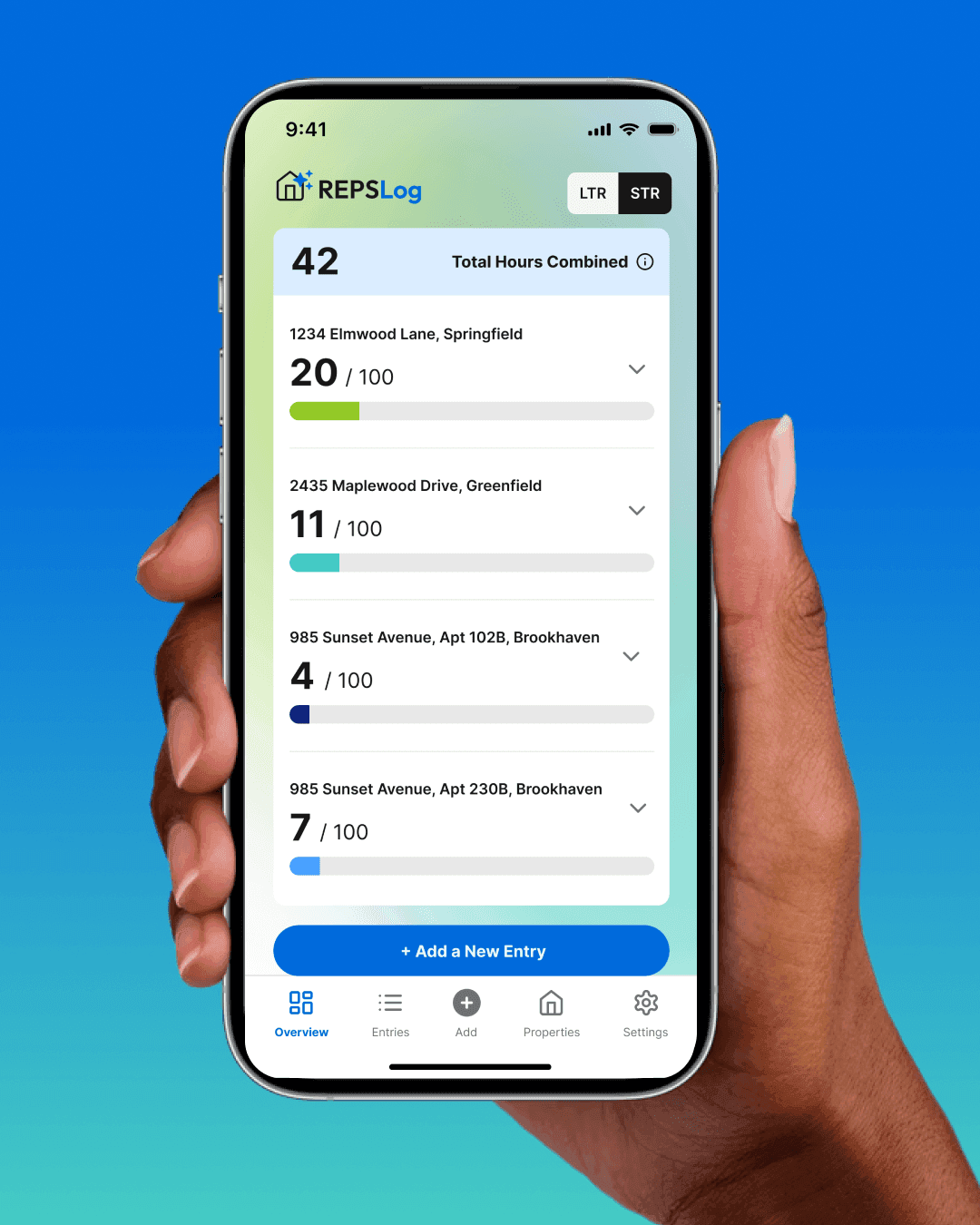
2. Not Tracking Hours
The IRS requires documentation of material participation. Without a contemporaneous log of your hours, you have no defensible proof. "I spent a lot of time on it" does not hold up in Tax Court.
3. Mixing Personal Use
If you use the STR property personally for more than 14 days (or 10% of the days it's rented, whichever is greater), the property may be classified as a personal residence, which limits your ability to deduct losses.
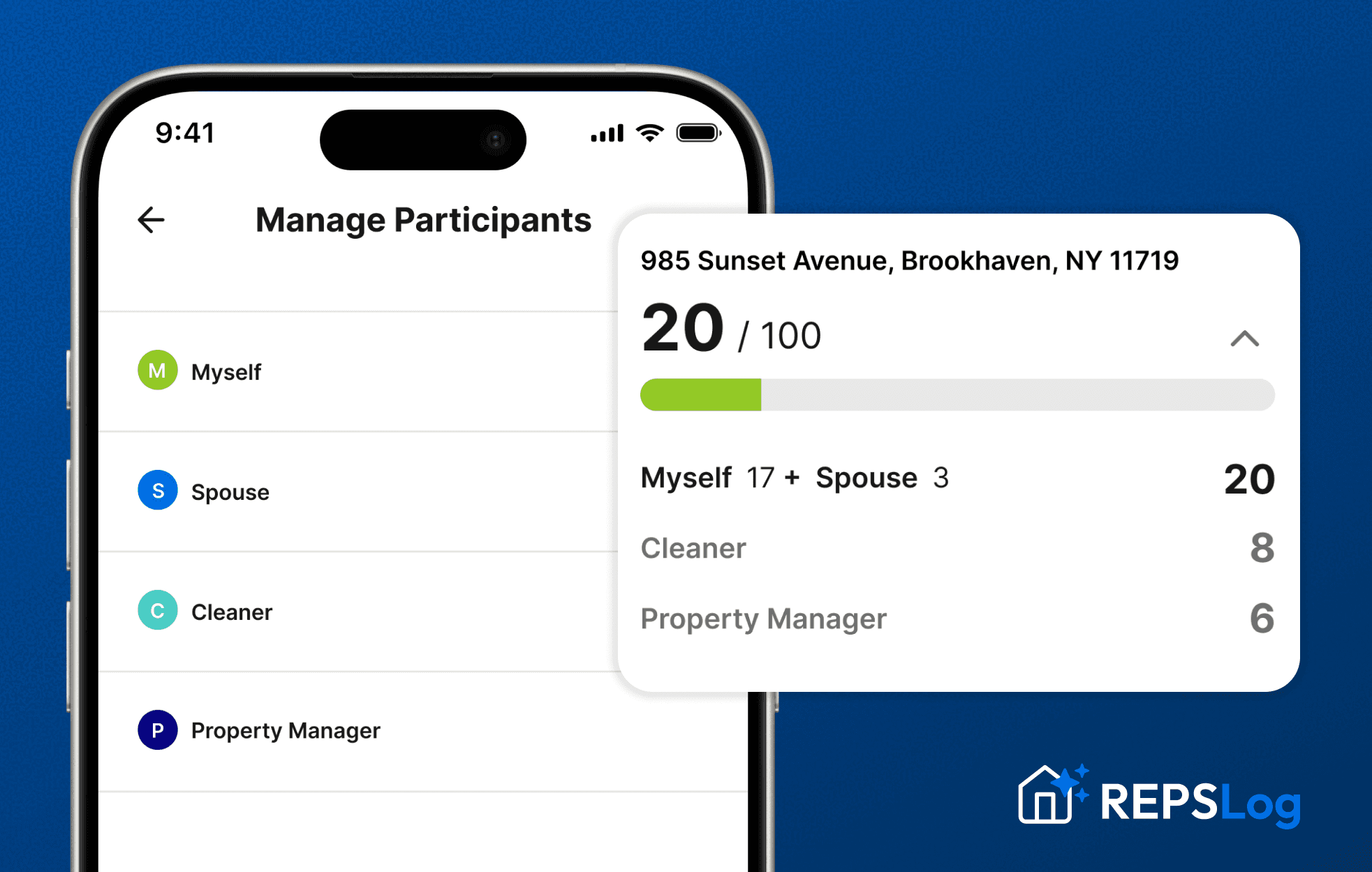
4. Not Tracking Participant Hours
For the 100-hour / no-one-more test, you need to demonstrate that no other individual spent more time on the property than you. That means tracking hours for cleaners, co-hosts, and anyone else involved. If your cleaner logged 150 hours and you logged 120, you fail the test.